Skip to content

Case study · Built by Inseed

Playlists

Vibe search shipped in 3 weeks. AI searches jumped ~200% within a week.

A consumer location app for restaurants, cafés, bars, and parks. We added vector-embedding-based vibe search that lets users type Gen-Z mood phrases ("cozy café", "boozy bar") and get places that match.

  • Inseed-direct
  • Consumer / lifestyle
  • React Native (Expo)
  • Vector search (pgvector)
  • OpenAI embeddings
  • AWS
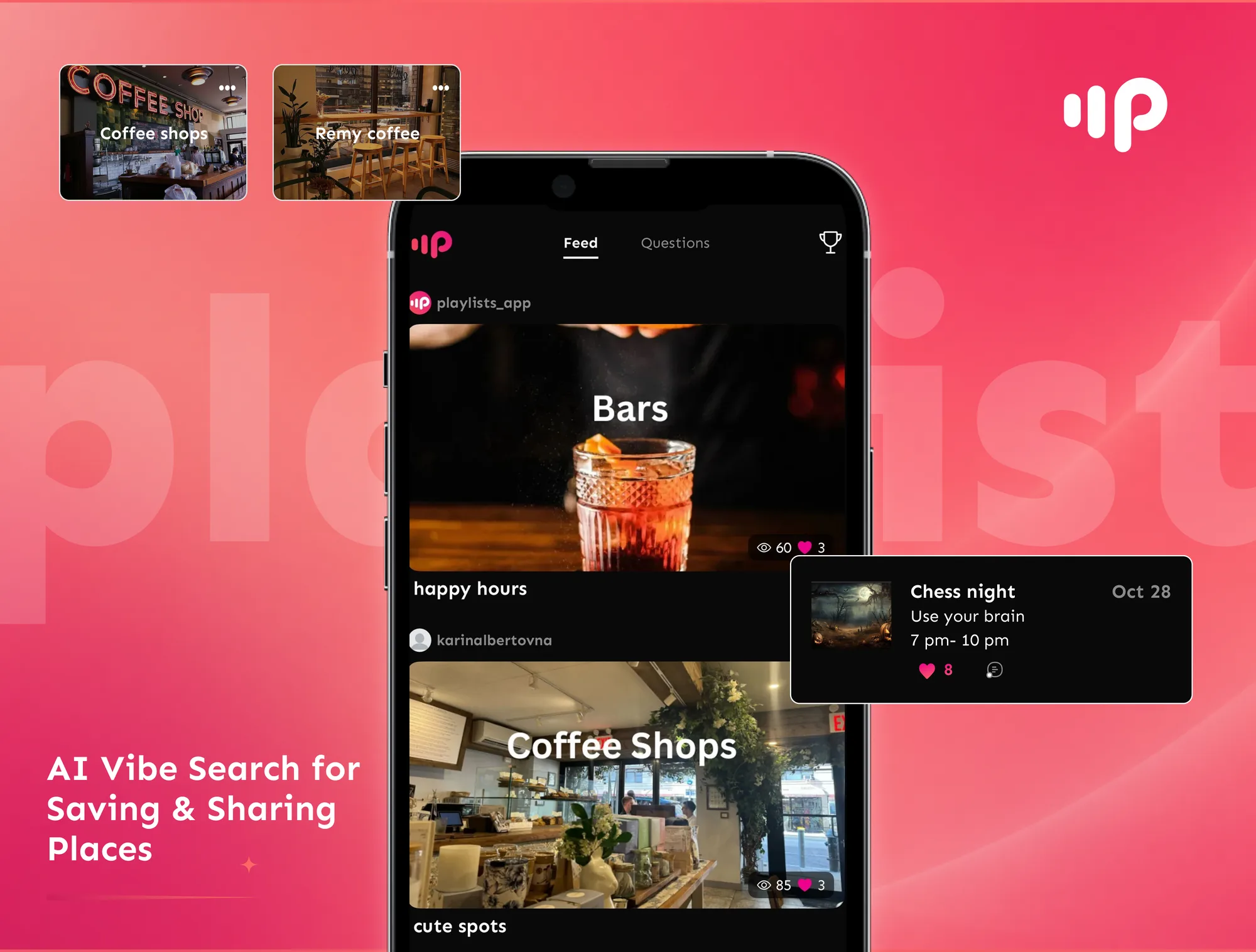
Playlists marketing visual
Engagement type
Inseed-direct
Duration
March 2025 to ~July 2025 (~3 to 4 months end to end)
Vibe search shipped in
3 weeks from kickoff to first cut
Team size (Inseed)
3 to 4 across mobile, backend, AI search
Industry
Consumer / lifestyle (location discovery)
Year shipped
2025
Scope
iOS app, Android app, vibe search, place library organizer, home recommendations

Problem

The problem

Playlists was a polished location organizer: restaurants, cafés, bars, parks, all browsable in one place. It had the depth and the UX, but it sat in the same shape as every other discovery app in the category. The lack of a clear USP showed up in search and engagement: users found places, but they did not come back to discover new ones.

Sofia wanted a single feature that would change the way people thought about the product. Search and discovery were the obvious surfaces. The brief: build something no other location app had, ship it in weeks not months, and have it land in a way users would actually use.

Approach

The approach

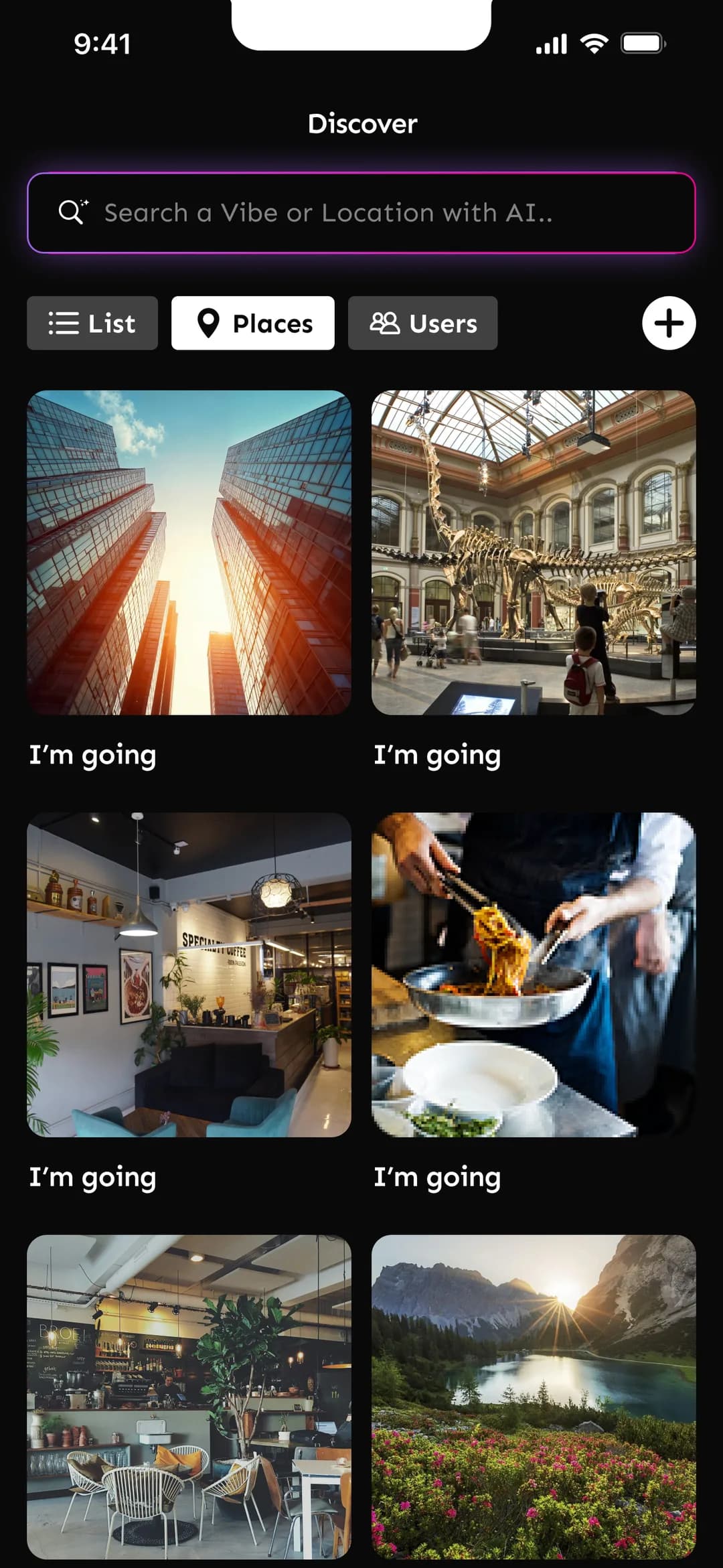
We picked vibe search. Instead of filtering by cuisine, neighborhood, or rating, users type the way they actually talk: "cozy café", "boozy bar", "quiet park to read in", "Gen-Z brunch spot". The system pulls back places that match the vibe, ranked by similarity, blended with location and recency.

The team peaked at 3 to 4: 2 React Native engineers on mobile, 1 Python engineer running the vector search service, and 1 backend engineer wiring it into the existing API. Sofia stayed close on the product side. We treated the 3-week ship target as a hard milestone: cut everything that was not the search experience, ship the rest in follow-on iterations.

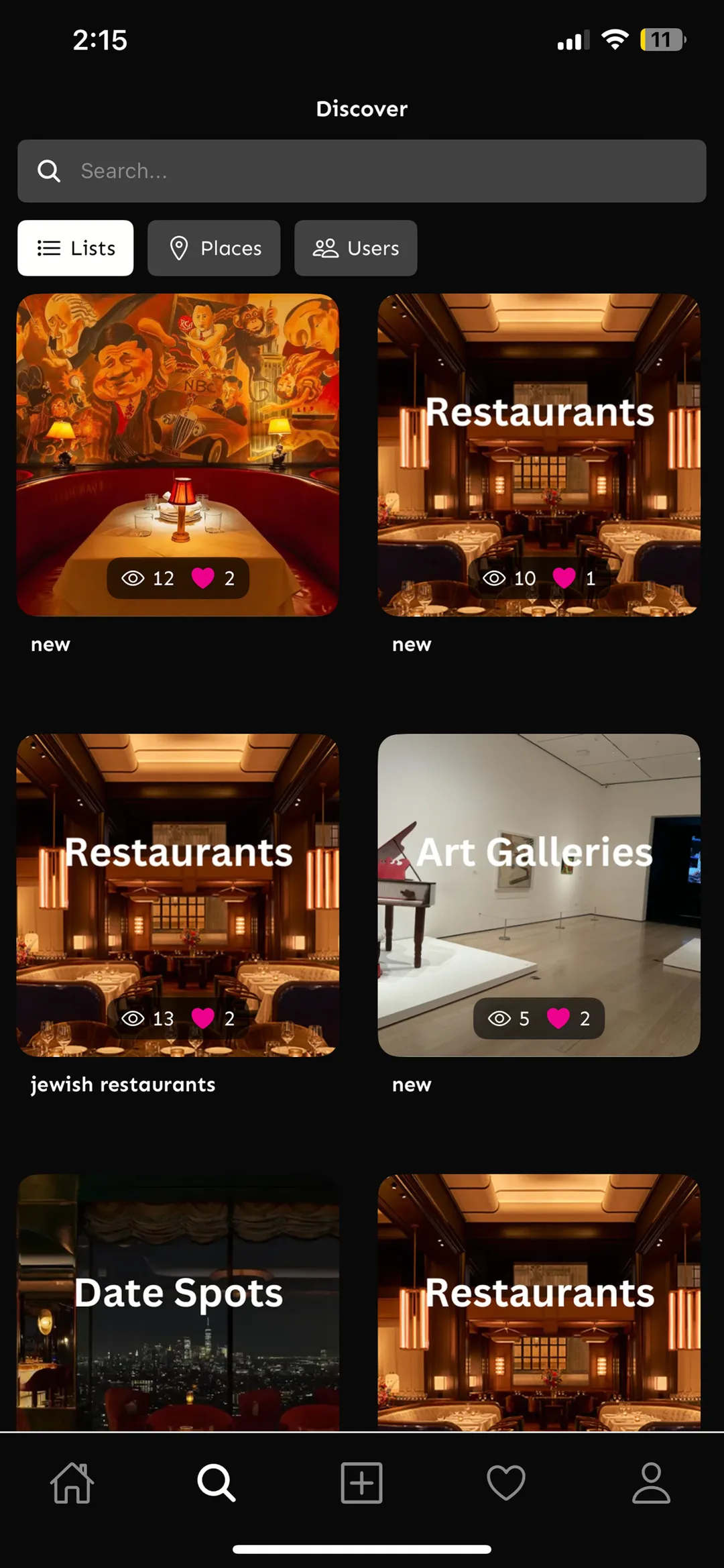
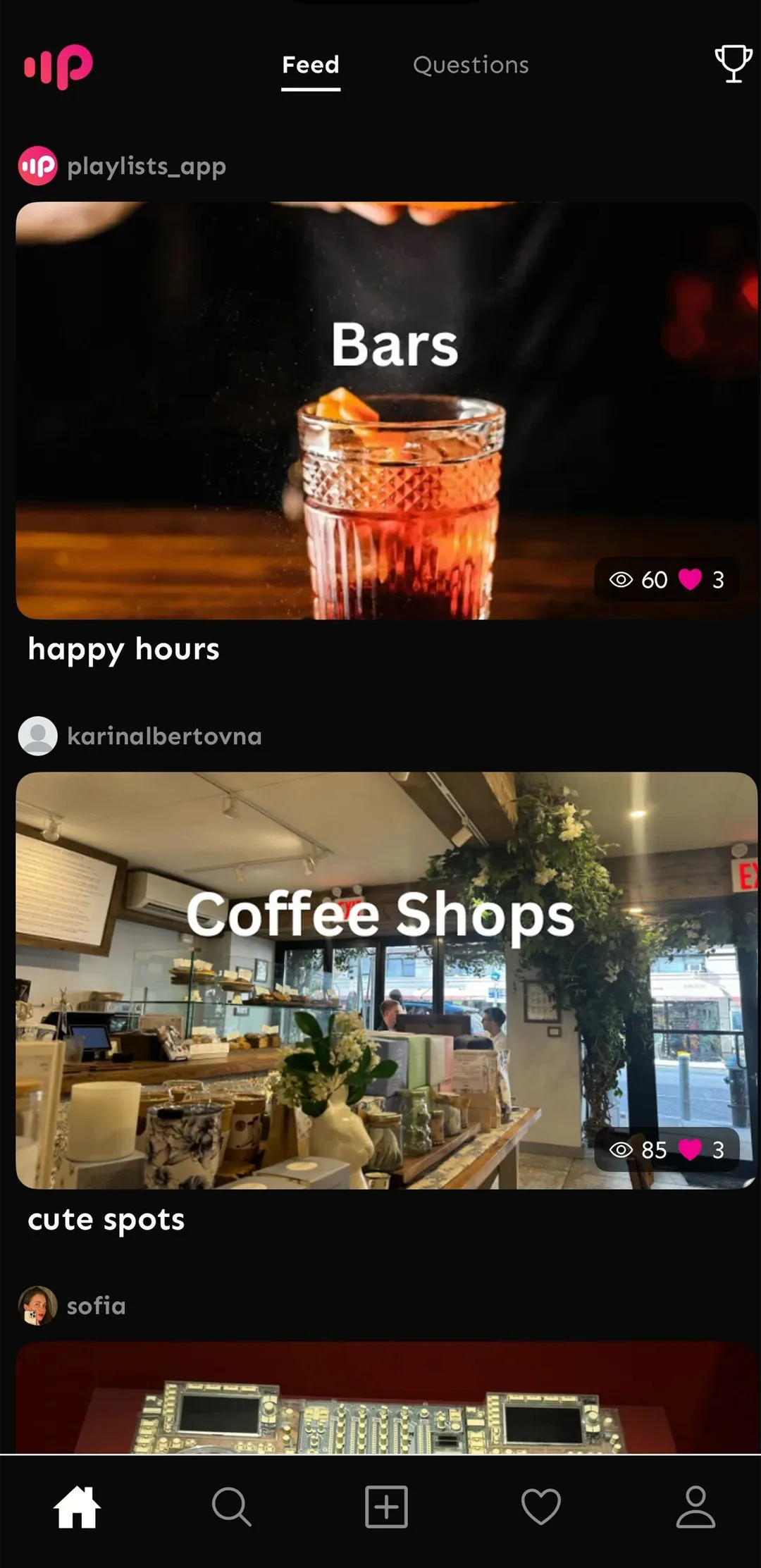
After vibe search landed we kept building. The place-library organizer (think Pinterest-for-locations, your saved cozy cafés, your bachelor party shortlist) shipped a few weeks later. Home-page recommendations pulled from the same embedding store, personalized to a user search history while staying entirely on-device for the privacy-sensitive parts.

Stack

Stack and architecture

Mobile
React Native, Expo (managed workflow)
Backend (existing)
Node.js API on existing infrastructure
AI search service
Python REST API on AWS
Vector store
pgvector on PostgreSQL
Embeddings
OpenAI text-embedding-3-small (vibe queries + place descriptions)
Caching layer
Application-level cache on common vibe queries
Hosting
AWS (Python service); existing infra for the rest

One decision worth telling

One decision worth telling: caching the embedding spend

Vector search needs embeddings. Embeddings cost money per token. The naive setup, where every "cozy café" search hits OpenAI and pays the embedding cost again, blows up the bill fast on a consumer app where many users type the same Gen-Z phrases.

We added an application-level cache keyed on the vibe phrase: the first user typing "cozy café" pays the embedding round trip; every subsequent user pulls the cached vector and skips OpenAI entirely. Place-side embeddings (the catalog) are computed once at ingest time and live in pgvector permanently. The combination cut the steady-state embedding cost by an order of magnitude without changing the user experience.

Outcome

The outcome

  • Vibe search shipped to production in 3 weeks from kickoff.
  • AI-driven searches on the platform jumped by ~200% within the first week of the vibe search launch.
  • Place library organizer and home-page recommendations shipped as the natural extensions, both reusing the embedding store.
  • No third-party AI provider lock-in beyond the embedding API: pgvector plus Python kept the recommendation surface in-house and on-platform.
They have great expertise in front and back end, but they also brought great AI expertise to the table, which helped us build AI features, specifically search for places based on the vibe. They were very responsive and reliable, which made the whole process of building the app very smooth and efficient.
Sofia, Founder, Playlists

Video

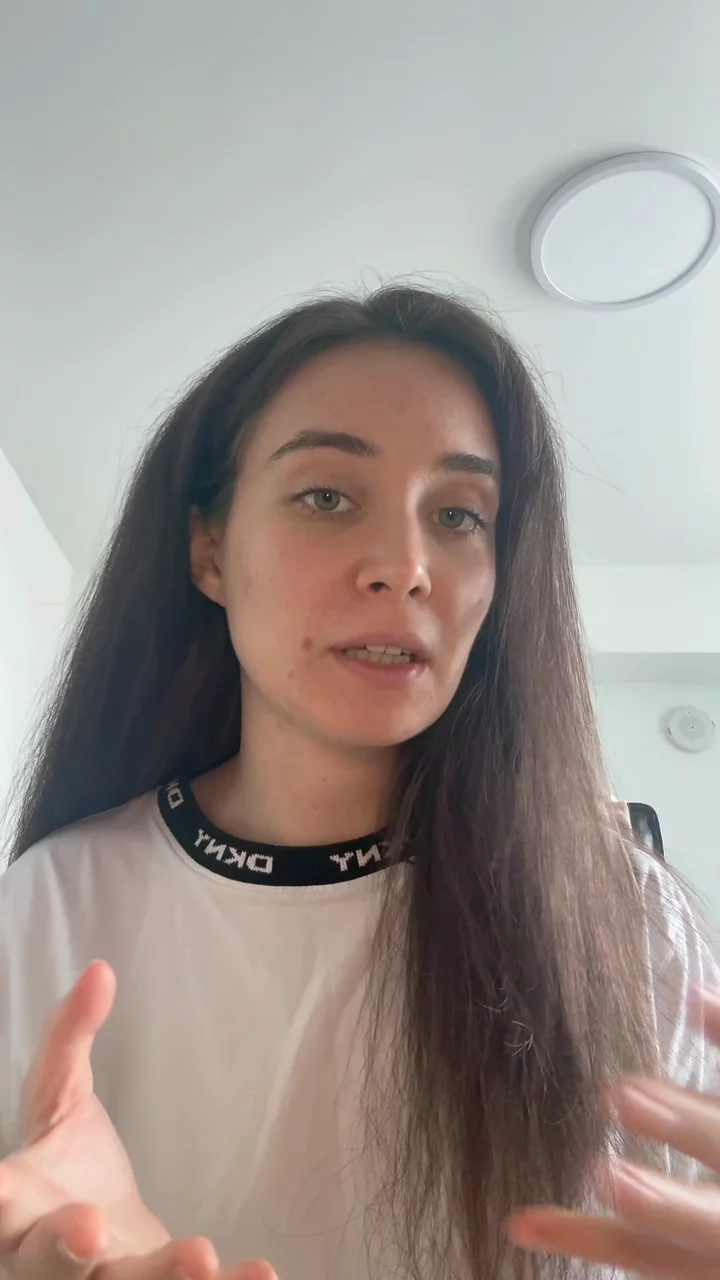
Video testimonial

Sofia, Founder, Playlists video testimonial

Sofia, Founder, Playlists.

Selected screens

Selected screens

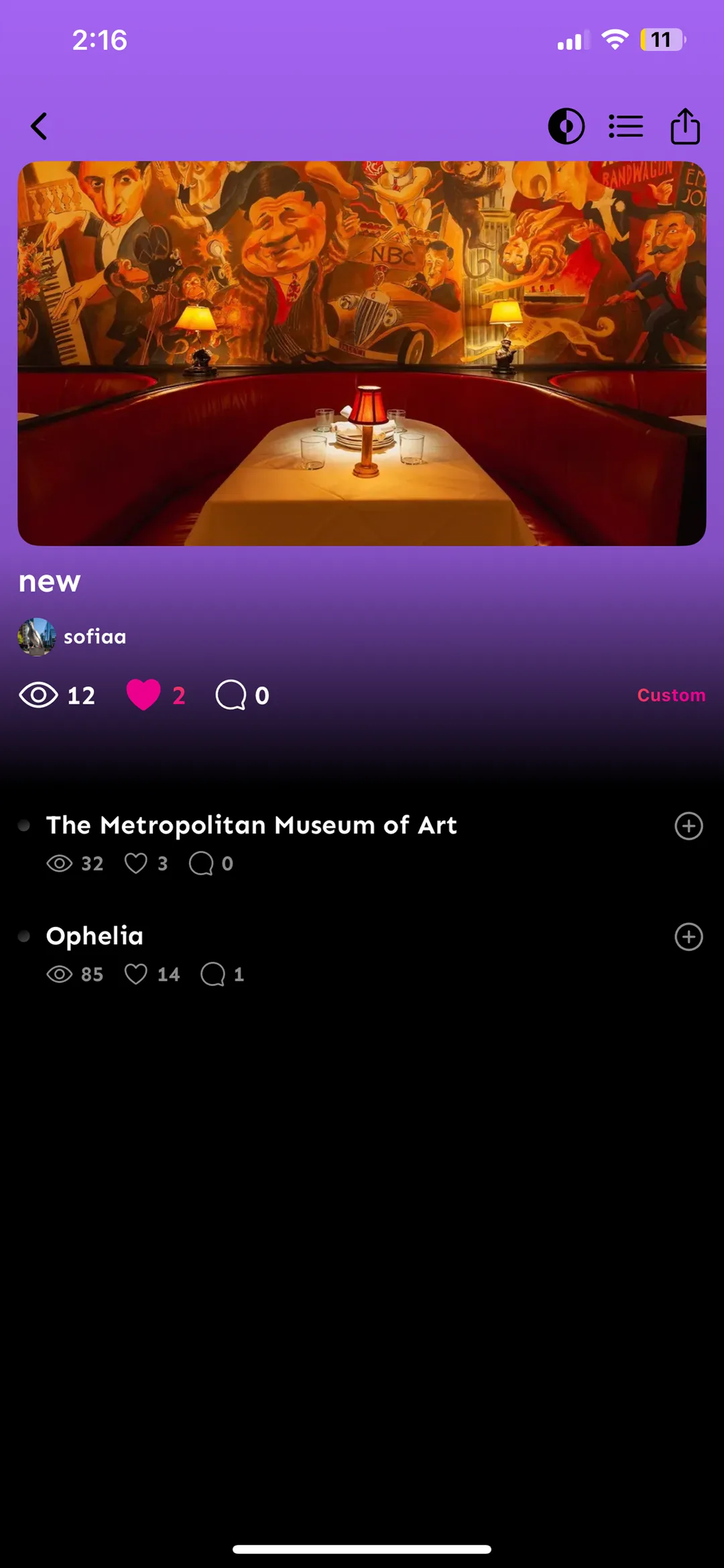
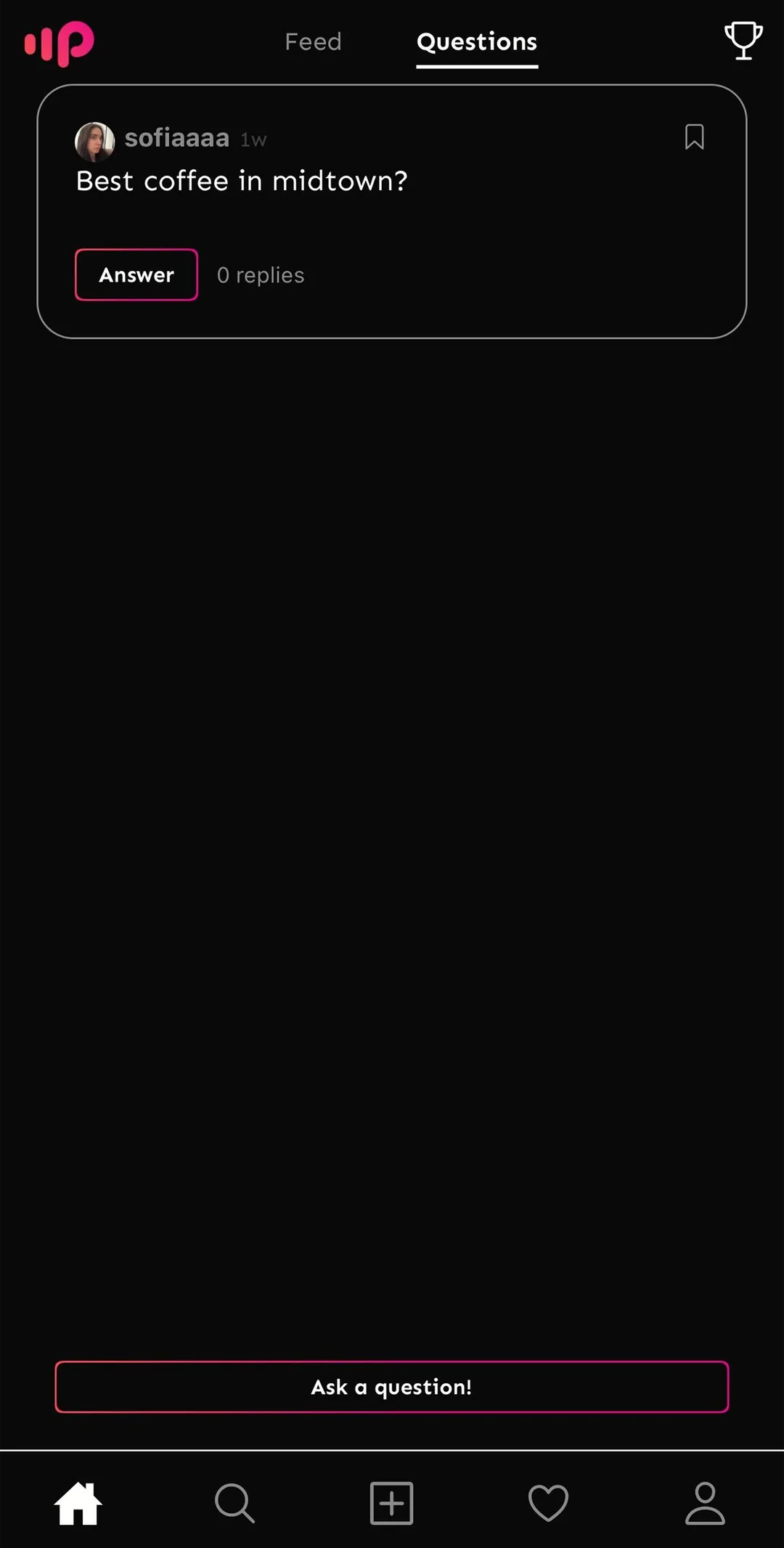
Vibe search input with example queries
Vibe search results, ranked
Place library organizer
Home-page personalized recommendations
Place detail view
Place detail view

What we would do differently

What we would do differently

Most agencies skip this section. We include it because honest hindsight is the kind of credibility you cannot buy.

Push harder on positioning and marketing.

The product itself worked. Users who tried vibe search came back. What did not match the build quality was the go-to-market and category narrative around the feature, which sat in Sofia's court but where we had a view. We would have flagged earlier and pushed for a sharper one-line positioning before launch, not after.

Ship a lightweight web companion.

Place organization (saving, sorting, sharing collections) is the kind of task users want to do at a desk, not on a phone. A read-mostly web companion to the mobile app, even a v0 with no editing, would have lifted weekly engagement on the organizer feature. Mobile-first was the right call; mobile-only left value on the table.

Related work

Other case studies.

Built by Inseed

The LYVE App

Caribbean carnival super-app. Zero to App Store in under 4 months. Past 3,000 users in the next 3.

Read the case study

Founder-portfolio engagement

Nightingale Labs

Mobile + light ML. Case study in progress.

Coming soon

Got an AI feature in mind?

Tell us what you are building. We will tell you what 3 weeks gets you, what 12 weeks gets you, and what we would do first.

Book your audit