Your competitors just shipped an AI feature and you are getting pressure to match it. You have a clear hypothesis about which feature to ship and you want a senior team to ship it cleanly rather than figure it out on your own.
AI Integration Sprint
Ship one AI feature into your live app in 2 to 4 weeks. No rewrite.
For mobile product teams with a production app who want to ship one AI feature, end to end, without a rebuild.
A productized sprint that takes a single AI integration from scoped to shipped, with milestone-based delivery and weekly demos. You see the feature working on a real device by the end of week 2 at the latest. Handoff includes monitoring, a written playbook for the next integration, and a recommendation on what to ship after this one.
Products we've built and shipped





- Bookvid

- Alight






Is this you?
When the integration sprint is the right next step.
Your users are asking for an AI feature directly, in support tickets or App Store reviews, and you want to put a real version of it in their hands within a month rather than a quarter.
You have an engineering team you trust, they are good at mobile, and they have not shipped against an LLM API in production before. You want a senior team to ship the first one alongside your team and leave behind a pattern they can repeat.
You completed our Mobile App Audit (or one like it) and the recommended first integration is now ready to scope and ship.
The deliverable
A shipped feature, an audit trail, and a playbook for the next one.
- One AI feature shipped end to end in your production app (iOS and Android, or whichever platforms your app supports)
- Server-side integration with your chosen model vendor (OpenAI, Anthropic, or a cloud-hosted open-weight model), prompt management, caching, and a fallback path
- Mobile-side UX for the feature, designed so the AI origin is unambiguous and the failure mode is graceful
- Telemetry events instrumented so you can measure usage, success rate, and per-call cost from week 1 post-launch
- A short written playbook (5 to 10 pages) covering the integration pattern, decisions made, and recommended approach for the next feature
- A handoff call with your engineering team and a 30-day async support window
How it works
Two to four weeks, four phases.
01
Week 1
Scope and design
We finalize the integration pattern (one of our 5: chatbot overlay, content augmentation, predictive UX, agentic actions, on-device inference) with you. We pick the model vendor. We design the failure-mode UX and confirm the telemetry plan.
02
Weeks 1 to 2
Server and prompts
We build the backend service that owns the model call, including prompt construction, caching, rate limiting, and fallback. We benchmark cost and latency against your target.
03
Weeks 2 to 3
Mobile UX
We integrate the feature into your existing mobile app in a branch, with a fully working build by end of week 2. Weekly demo, instrumented for QA.
04
Weeks 3 to 4
Polish, ship, hand off
We close the QA loop, ship through your existing release process, monitor the first 7 days, deliver the playbook, and hold the handoff call.
For longer integrations or more complex feature scope, the sprint extends to 4 weeks. For simpler ones, the sprint can compress to 2.
Pricing
Fixed scope, fixed price, set at scoping.
- Duration
- 2 to 4 weeks, fixed at scoping
- Price
- $15K to $30K, fixed band; final price set at scoping based on integration complexity
- Included
- Server build, prompt management, mobile UX, telemetry, playbook, handoff, 30-day async support
- Excluded
- Rebuilds of unrelated parts of the app; deep redesign of unrelated UX; multi-feature scope (handle as separate sprints); on-device inference work (covered under MVP Build or a custom engagement)
FAQ
Common questions.
How do you pick the feature?
If you completed our audit, the audit recommends one. If you have not, we run a 60-minute scoping call to pick together. We default to the feature with the highest expected impact on the lowest engineering risk.
What if our feature is more complex than 4 weeks?
We will say so during scoping. The honest answer is usually one of: split into two sprints, scope down the first version, or move to a fixed-price MVP Build if the work is genuinely larger than a sprint.
What stack do you work in?
React Native with Expo or bare workflow on the mobile side. We also handle Flutter and native iOS plus Android codebases (some on-device patterns work better in native). Backend stack we match to yours; we have shipped against Node, Python, and Go.
Cloud or on-device?
Cloud-first for almost every sprint. On-device inference adds engineering complexity that is rarely worth it for a 2 to 4 week sprint. If your use case requires on-device (privacy, offline), we will flag it during scoping and recommend a longer engagement.
What about vendor lock-in?
We use one primary vendor (OpenAI or Anthropic, typically) and design the integration so a second vendor can be wired in as a fallback. We do not build vendor-agnostic abstractions that prevent you from using model-specific features.
Who owns the code, the prompts, and the model outputs?
You do. Everything we write for the sprint is delivered to you, in your repository, under your license. Prompts and any fine-tuning data go in the repo too.
What happens after the sprint ends?
Three options: (a) you take it from there, with the playbook as your reference, (b) you book a second sprint for the next feature, (c) you move to an Embedded Team retainer for ongoing work.
Case study spotlight
A worked example.
Our work on The LYVE App included content-augmentation integrations on the marketplace surfaces, built on a server-side service with prompt caching and a smaller-model fallback path for the long tail of records. Effective per-listing cost dropped to roughly 1/8th of a naive implementation.
The pattern that worked there is one of the templates we now use as the starting point for similar integrations.
Read the full LYVE case study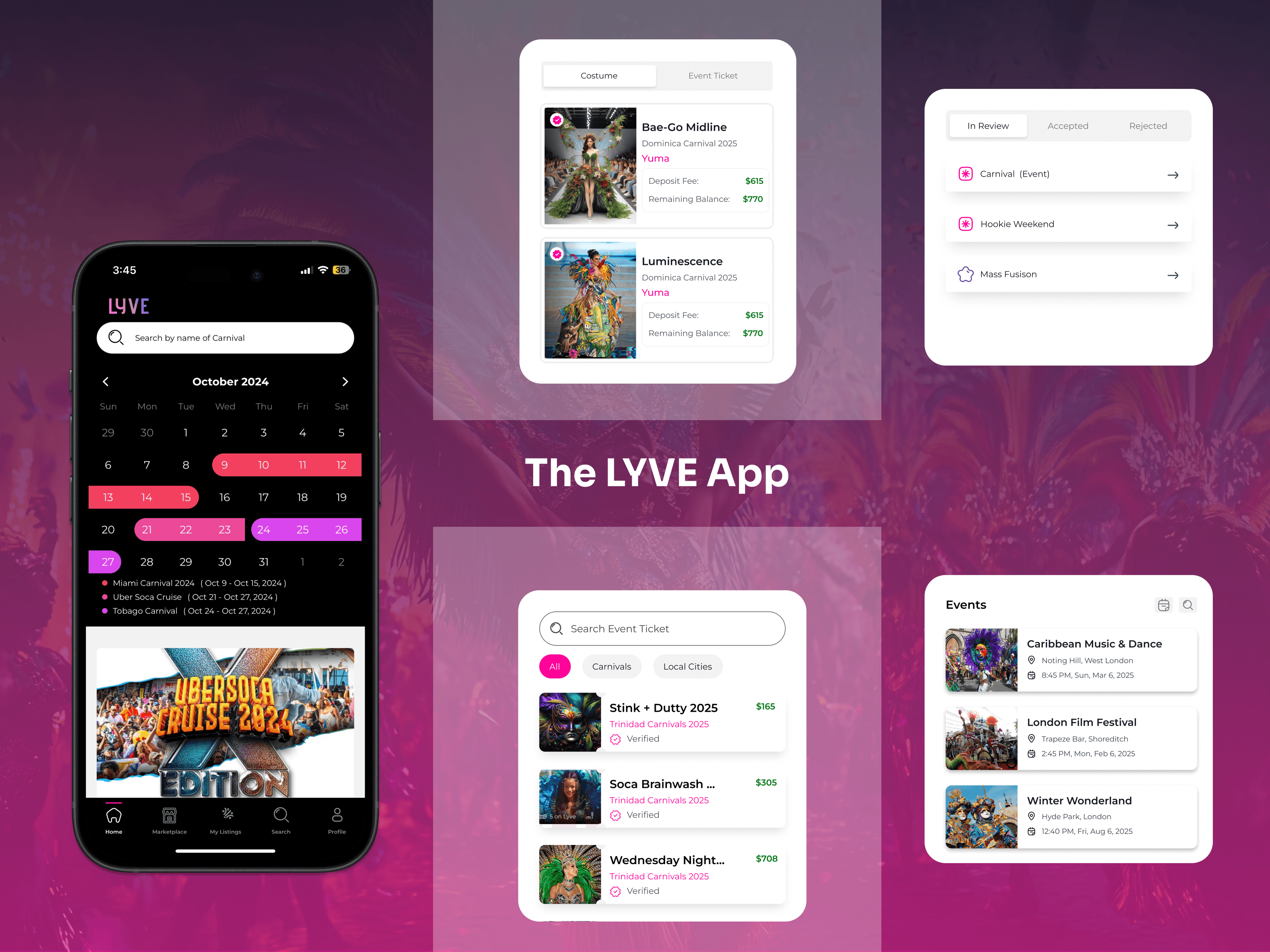
Pick the feature. Ship it in 4 weeks.
We will scope it with you. The audit is the cheapest first step if you are not sure yet.
Book an AI Integration Sprint